By clicking “Accept”, you agree to the storing of cookies on your device to enhance site navigation, analyze site usage, and assist in our marketing efforts. View our Privacy Policy for more information.
Heat, cold, and air quality can turn dangerous fast. Here's how to plan ahead, monitor conditions, and take action before risks become emergencies.
Heat illness can progress from mild symptoms to a medical emergency in minutes. Air quality can shift from safe to hazardous in an afternoon. Effective prevention depends on catching these changes in real time and having protocols that kick in automatically when thresholds are crossed.
OHS leaders can build systems that connect real-time data to immediate action. This guide offers a range of strategies for monitoring conditions, establishing thresholds, and building action plans— starting with the basics and advancing to more complex approaches in the final section.
Keep up with regulatory requirements. Federal law requires employers to protect workers from known hazards, including extreme heat. While OSHA's national heat standard is still in development, several states have enacted their own regulations, and some industries, such as construction, have established voluntary best practices. OSHA often looks to these benchmarks when evaluating whether employers have taken reasonable precautions. Stay up to date on the requirements in your state and the guidance for your industry.
Prepare every work environment for extreme conditions. Whether workers are in warehouses, outdoors on job sites, indoors in an office or kitchen, or in delivery vehicles, they need access to adequate cooling, heating, and clean air. Evaluate each setting, invest in appropriate ventilation and filtration, and reassess regularly as conditions or occupancy change.
Solution Spotlight: AIHA’s Heat Stress App helps prevent heat-related illness by using WBGT calculations to assess your heat stress risk and recommend protective actions.
Establish real-time heat monitoring. Monitoring only matters if it triggers action. NIOSH, ACGIH, and the U.S. military recommend measuring Wet Bulb Globe Temperature (WBGT), not just heat index. Don't forget about indoor workers; workers in warehouses, manufacturing facilities, commercial kitchens, delivery vehicles, and agricultural processing face significant heat risks.
Tie every data point to a specific response action. A thermometer on the wall is a start, but it doesn’t protect workers. A documented protocol that says "at X temperature, we do Y" is much better. Build a response matrix that connects environmental readings to specific protective actions (e.g., additional breaks, personal protective equipment (PPE) deployment, work modification, stop-work).
Solution Spotlight: OSHA's proposed heat standard establishes a two-tier action threshold framework (initial heat trigger and high heat trigger) that provides a practical model any employer can adopt now. See OSHA's Heat Rulemaking Fact Sheet.
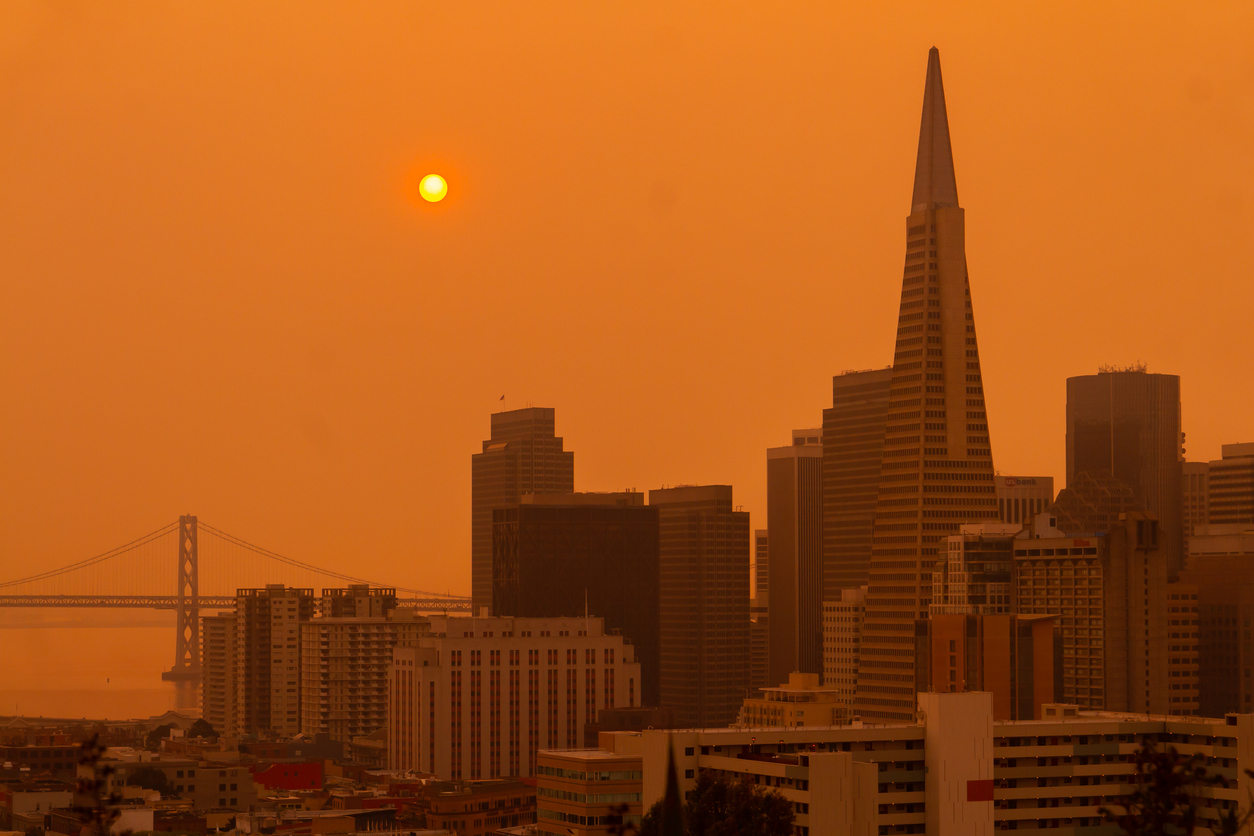
Monitor air quality, especially during wildfire smoke events. Use EPA's AirNow system as a baseline and consider supplementing with on-site monitors for site-specific data. Establish clear AQI-based action triggers for your operations.
Solution Spotlight: Cal/OSHA's Wildfire Smoke Protection Standard is the most comprehensive regulatory framework for protecting workers from smoke and provides a ready-made action threshold model.
Designate a safety lead for accountability. A plan succeeds only with clear ownership and awareness. Ensure someone is accountable for these safety protocols being implemented. Make sure employees understand the plan, and post it visibly at worksites, in your online employee resources, or other channels like onboarding and meetings.
Build On It
Use physiological monitoring to complement environmental monitoring. Environmental data tells you about conditions; physiological monitoring tells you how individual workers are responding. Simple indicators — heart rate, dehydration, and signs of heat strain — should be part of your monitoring program for high-exposure work.
Solution Spotlight:ACGIH's Threshold Limit Values (TLVs) for heat stress provide a framework for physiological monitoring criteria, including specific heart rate, core temperature, and recovery benchmarks.
Adopt flag-based or color-coded alert systems. The U.S. military's five-tier WBGT flag system (White/Green/Yellow/Red/Black) with specific work/rest ratios at each level is a model that can be translated directly to civilian workplaces.
Lead the Field
Deploy wearable technology for continuous, individualized risk assessment. Emerging wearable devices can predict heat stress 15 to 30 minutes before visible symptoms appear, enabling intervention before incidents occur. Look for solutions that require clear consent, secure data handling, and opt-out options to address privacy and equity concerns.
Explore AI-driven predictive models. Combine environmental monitoring, physiological data, weather forecasts, and work schedules to anticipate risk before it materializes. To reduce errors and privacy risks, pick tools that incorporate built-in bias checks, minimal personal data collection, and worker feedback.
Workforce readiness requires coordination across teams. Explore guides designed for more functions at your organization, and learn more about the Extreme Weather + Work initiative.
Human Resources (HR) Readiness strategies for HR focus areas including benefits design, leave policies, people analytics, and more.
Extreme Weather + Work Home Learn how your organization can support workers before, during, and after extreme weather.
About Extreme Weather + Work
Extreme Weather + Work is an initiative of the Health Action Alliance. We bring together leaders who rarely sit in the same room and connect them with peers across industries, giving them the research and tools they need to support their people before, during, and after extreme weather.
Sign up for our newsletter to keep updated on HAA’s latest initiatives, insights and recommendations, and be first to receive new resources and event invitations.






.png)


.svg)


