By clicking “Accept”, you agree to the storing of cookies on your device to enhance site navigation, analyze site usage, and assist in our marketing efforts. View our Privacy Policy for more information.
Protecting Construction Workers From Extreme Heat: A Guide for Employers
Rising temperatures disrupt work and put the safety of your crews at risk. Here are smart steps you can take to support your workers and keep your projects on track.
In Collaboration With:
Extreme heat is one of the biggest safety challenges on construction sites today. Rising temperatures disrupt work and put crews at risk.
The good news is that construction employers and safety leads can take smart steps to keep their people safe and their projects on track. This guide, created by the Health Action Alliance in collaboration with the Korey Stringer Institute, outlines the dangers posed by extreme heat, the business case for action, and key elements of an effective heat stress management plan.
How Extreme Heat Harms Construction Workers
Risk of occupational injury increases by 17.4% during heat waves. Construction workers are especially vulnerable to heat because of the job's physical demands and outdoor exposure. In fact, construction workers are 13 times more likely to die of a heat-related illness than workers in other industries.
Prolonged heat can strain nearly every system in the body:
Serious Heat-Related Illnesses Heat stroke, exhaustion, dehydration, rapid muscle breakdown, and acute or chronic kidney injury
Cardiovascular Risks Heart attack, stroke, and other cardiovascular strain
Cognitive and Mental Effects Slower reaction times, confusion, mood changes, and long-term cognitive decline
Chronic Health Impacts Worsened high blood pressure, diabetes, respiratory disease, and kidney injury
For construction employers, protecting workers from heat stress helps avoid costly downtime, medical claims, and turnover.
Employee Retention
43% of workers say their employer’s climate-readiness is a key reason they stay. (HAA/Northwind Climate)
Productivity
More than 3.4 billion U.S. labor hours in construction and related sectors are lost each year due to heat exposure.
By 2030, construction's share of working hours lost to heat stress globally is projected to triple to 19%.
Every 2°F rise above 93°F leads to a 74% increase in missed workdays.
Medical Expenses
Every 2°F rise above 93°F leads to a 40% increase in medical expenses.
Extreme heat drives up U.S. health care costs by $1 billion each summer.
Know the Rules
Federal law requires employers to protect workers from known hazards, including extreme heat. Under OSHA’s General Duty Clause, construction employers must take reasonable steps to prevent heat illness and injury.
Some states — such as California, Washington, and Oregon — have specific heat standards for outdoor workers, and federal OSHA has proposed a national heat standard.
The ANSI/ASSP A10.50-2024 Standard for Heat Stress Management In Construction and Demolition Operations, developed by the American National Standards Institute and the American Society of Safety Professionals, outlines industry best practices for managing heat stress on construction and demolition sites. While this guidance is voluntary, OSHA sometimes looks to these standards when assessing whether employers are taking appropriate steps to protect workers.
Heat Monitoring
Use weather forecasts and on-site monitoring tools to assess heat risk at your job sites. The two most common heat stress indices are wet bulb globe temperature (WBGT) and heat index (HI). It's important to understand the difference between the two, especially how they're measured and what safe levels are for each.
An on-site WBGT meter is the most accurate way to measure heat stress. It accounts for temperature, humidity, wind speed, and radiant heat from surfaces like asphalt and machinery. For example, asphalt can exceed 140°F even when air temperatures are only 86°F.
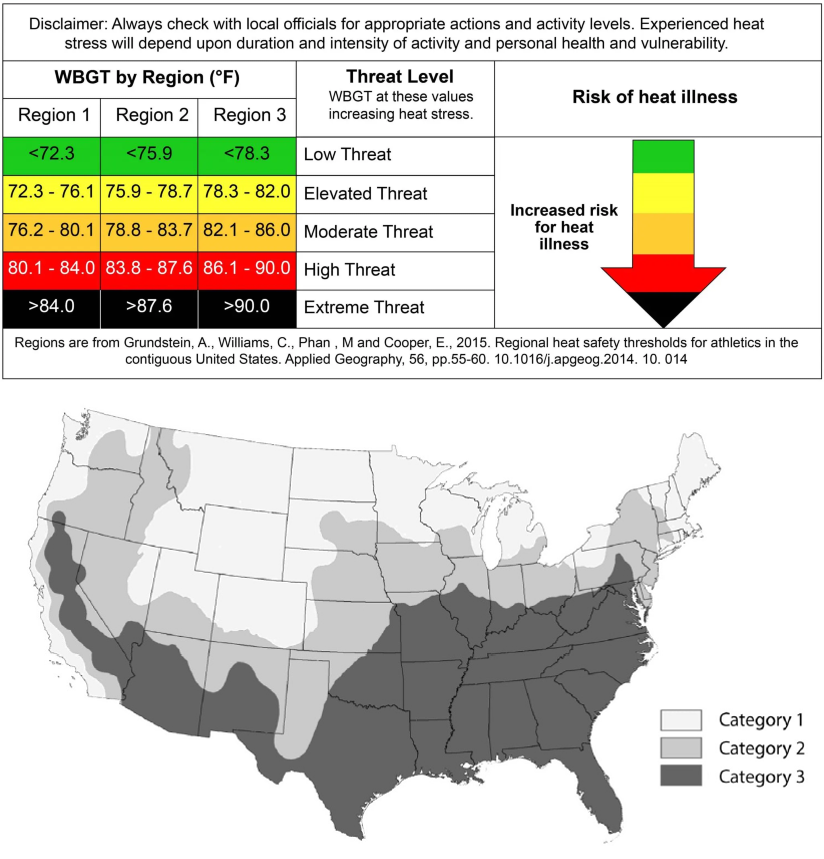
WBGT also recognizes differences between regions of the country and has region-specific and work intensity thresholds for assessing risk. You can use tools such as the AIHA Heat Stress App to assess local conditions in real time.
Heat Index
The heat index (HI) measures how hot it feels outside based on air temperature and humidity. However, the HI doesn’t account for radiation or air flow. The OSHA-NIOSH Heat Safety Tool App can tell you the current and forecasted heat index near your location.
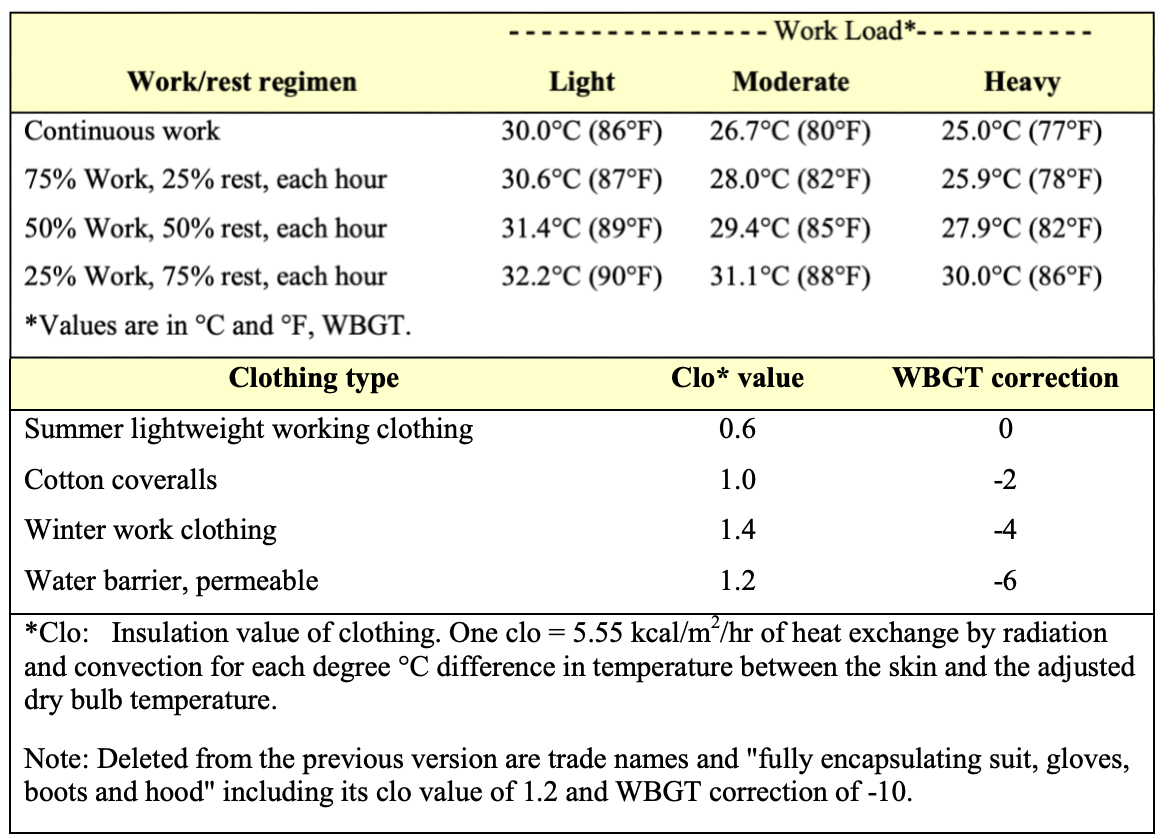
ACGIH's WBGT guidelines based on work intensity and clothing type. (Oregon OSHA)
Employer Strategies To Beat the Heat
Construction employers can keep crews safe amid rising temperatures by creating and implementing a heat stress plan. Smart decisions made before, during, and after each shift — along with clear emergency plans and a strong safety culture — can save lives and reduce costs.
Before the Shift: Prepare and Acclimatize
Forecast and monitor conditions. Use weather forecasts and on-site monitoring tools to anticipate heat risks each day. Activate your heat stress management plan when exposures reach or exceed 70° WBGT (≈80° heat index).
Plan schedules around heat. Whenever possible, schedule physically demanding tasks for cooler hours of the day. During periods of extreme heat, shorten work periods and add rest breaks to allow recovery time.
Stock hydration supplies at every job site. At each job site, set up cooling stations with portable coolers or dispensers of clean, cool water and shaded rest areas for workers to use throughout the day. For heavy or extended work (more than two hours) in hot, humid conditions, also provide electrolyte powders, drinks, or popsicles to replace salt and minerals lost through sweat. Make sure hydration and shade are easy for all crew members to access, not just supervisors.
Ensure access to sanitary facilities. Adequate restroom facilities make it easier for workers to stay hydrated and take regular cooling breaks. Lack of access can discourage drinking fluids, increasing risk.
Encourage pre-shift hydration. Remind workers to drink water a few hours before their shift. Workers who begin their shift dehydrated are at greater risk for heat illness and are also likely to demonstrate a decrease in productivity.
Hold a pre-shift safety huddle. In high heat, gather your crews to review the day’s heat conditions, remind workers to pace themselves, and reinforce the buddy system. When possible, ensure that no worker is ever alone or out of sight. Make sure everyone knows the signs of dehydration and heat illness and how to contact supervisors or emergency medical services.
Implement acclimatization plans. Almost half of heat-related workplace deaths occur on a worker’s very first day on the job, and over 70% occur during the first week. Help new workers build heat tolerance by gradually increasing workload and heat exposure over one to two weeks. Workers returning from an absence of a week or more will need to reacclimate. Pay special attention to workers who may be at higher risk, including older workers, pregnant or nursing workers, those with health conditions such as hypertension, obesity, or diabetes, and anyone taking medications that affect heat tolerance.
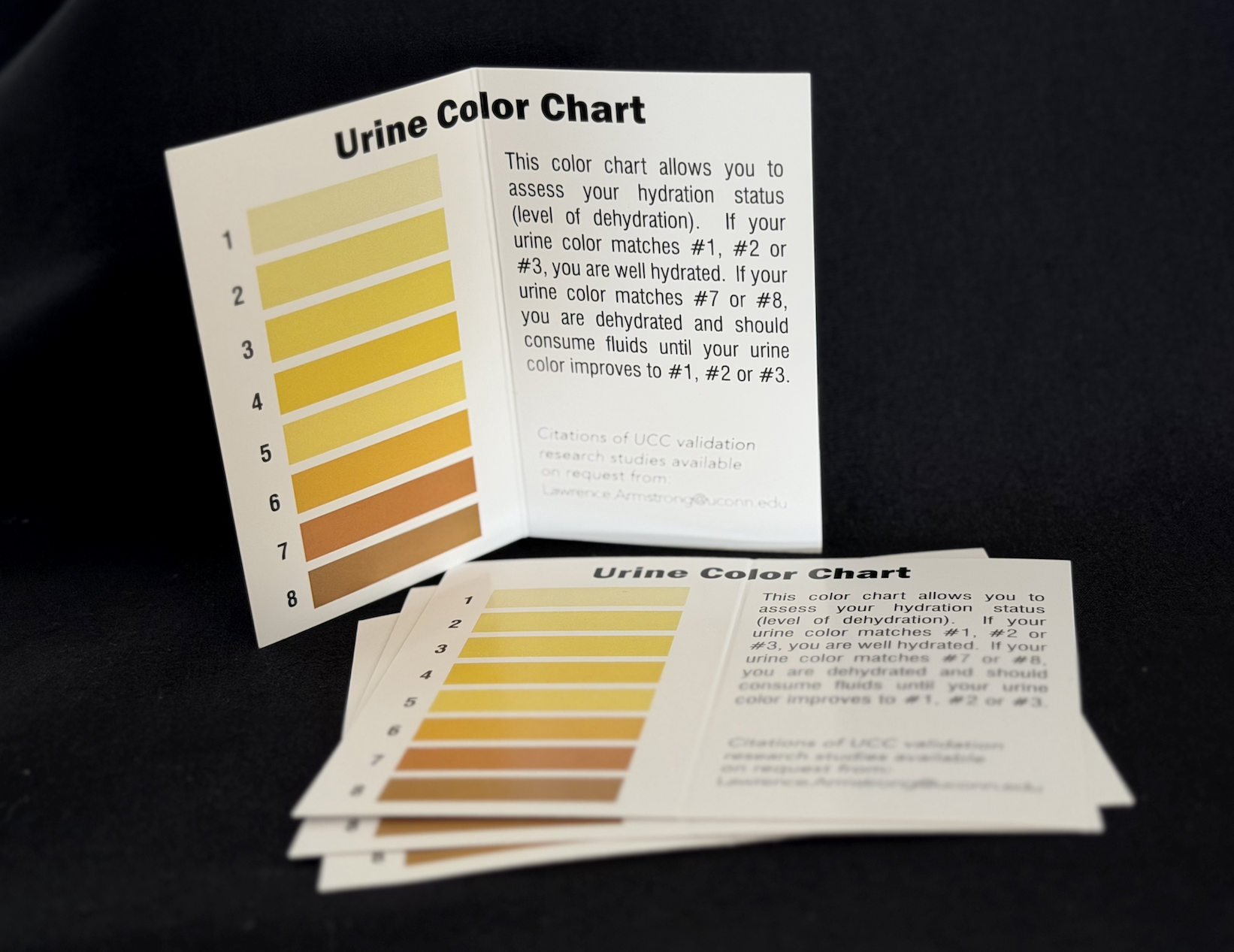
Your urine should look more like lemonade than apple juice. You can reach out to Lawrence.Armstrong@uconn.edu to request free urine color charts for your team.
During the Shift: Protect and Monitor
Monitor heat conditions in real time. Use handheld WBGT meters to measure actual site conditions hourly. When WBGT readings indicate high risk, increase supervision and check-ins, adjust work–rest cycles, provide more frequent breaks and hydration, reschedule strenuous tasks for cooler hours, and modify or pause work if heat reaches dangerous levels.
Encourage protective clothing. Encourage workers to wear lightweight, breathable, and reflective clothing. Consider providing cooling accessories such as evaporative towels, phase-change vests, or neck gaiters under hard hats. When safe, allow workers to remove excess layers.
Consider wearable tech. With workers’ consent, use wearable technology to monitor their vital signs in real time so you can immediately initiate heat stress protocols when needed. Consult your legal counsel to develop a data safety management plan, and identify a safety manager or industrial hygienist to monitor and interpret the data and make corresponding safety decisions.
Provide proper rest breaks. For moderate work in roughly 70°F WBGT (80°F heat index), plan for rest breaks each hour, and implement longer or more frequent rest breaks in higher heat. During breaks, give workers access to shaded or cooled areas such as pop-up tents or air-conditioned trailers. Provide ice, cool or iced towels, fans, or misting systems. If safe, allow removal of personal protective equipment (PPE) during rest breaks.
Encourage frequent hydration. Remind workers to drink water frequently, even if they don’t feel thirsty. Check that water supplies remain full and accessible, and ensure electrolyte drinks or powders are available for long or high-exertion shifts. Make sure employees know that urinating five to seven times a day and pale yellow urine are signs they are drinking enough water. Consider sharing our employee guide with more tips to help workers protect their health and safety.
Stay alert and communicate often. Empower every worker to speak up at the first sign of heat strain — such as dizziness, headache, or confusion — and to look out for their peers. Use a buddy system so no one works alone, and maintain two-way communication with supervisors at all times. Make sure every worker knows how to contact emergency medical services.
After the Shift: Recover
Check in with your crew. Invite brief feedback during your post-shift debrief to find out whether anyone felt unsafe or unwell. Listening and adjusting based on crew input helps strengthen your safety culture and build trust.
Promote post-shift recovery. Encourage workers to rehydrate, eat balanced meals, and get adequate rest. Dehydration, fatigue, and heat stress can carry over into the next shift.
Review and record conditions. Supervisors should log daily WBGT readings, work modifications, and any heat-related incidents. Tracking this data can help refine your heat stress plan and demonstrate compliance with OSHA's General Duty Clause.
Replenish and reset supplies. Check and restock water, electrolyte mixes, cooling gear, and first aid kits. Inspect fans, tents, and misting systems to ensure they’re clean and operational for the next shift.
Emergency Preparedness
Develop your emergency plan. Create a written emergency action plan for heat-related illness and review it during onboarding and regular training.
Train your team to recognize and respond. Teach workers how to spot early symptoms of heat illness, such as fatigue, confusion, or cramps. Heat stroke is a medical emergency, and identifying it as soon as possible can increase survival outcomes. Make sure they know when and who to call for help, and how to cool and stabilize themselves or another worker in distress. (See a detailed list of symptoms and actions below.)
Ensure emergency access. Make sure emergency medical services can reach your job site within 30 minutes and that all crew members know the site’s exact location or GPS coordinates. Identify the nearest hospital or urgent care facility before each shift.
Stock and maintain emergency supplies. Each job site should have cooling materials, first aid kits, and a reliable communication method ready at all times. Replace used supplies immediately after an incident.
Document and review each incident. After any heat-related emergency, record the details and discuss what could be improved, from response time to communication and prevention steps. Use these lessons to strengthen your heat stress management plan.
Recognizing Signs of Heat Illness
Share and discuss signs and symptoms of heat-related illness during onboarding, training, and safety huddles.
Heat Exhaustion
Heat exhaustion occurs when the body loses too much water and salt, usually through excessive sweating.
Signs & Symptoms
Inability to continue work
Excessive tiredness/fatigue
Thirsty
Weak
Dizzy
Vomiting
Lightheaded
Muscle cramps
Wobbly walking
Slow reaction time
Blurred vision
Nausea
Fast and weak pulse
Act Fast
Move to a cool place.
Lie down and elevate your legs.
Take frequent sips of cool water.
Loosen or remove unnecessary clothing, including shoes and socks.
Cool your body with ice, cold towels, or fanning.
If your symptoms persist or worsen, get immediate medical attention on-site, go to your nearest urgent care clinic or emergency room, or call 911.
Exertional Heat Stroke
Exertional heat stroke is the most serious heat-related illness. It occurs when core body temperature reaches dangerously high levels and can lead to death or permanent disability. The faster you act, the higher the chances of survival. Call 911 right away.
Signs & Symptoms
Body temperature over 104.5 degrees Fahrenheit
Confusion or disorientation
Erratic or irritable behavior
Collapsing/fainting
Loss of consciousness
Vomiting
Garbled speech or gibberish
Convulsions
Severe fatigue
Nausea
Rapid and strong pulse
Sweating profusely (this may not occur in cases of classic heat stroke)
Act Fast
CALL 911.
Stay with the person until emergency medical care arrives.
Move the person to a cooler place and remove their outer clothing.
Put the person in a tub or kiddie pool with ice water immediately.
If no tub is available, rotate ice-cold towels over the surface of their body while fanning them.
Building a Strong Safety Culture
Lead by example — and by reminder. Supervisors set the tone for every crew. When leaders take breaks, hydrate, and use cooling gear, workers are more likely to follow their lead. Reinforce this by reminding crews to hydrate, rest, and check in with each other so safety feels like a shared priority.
Keep safety communication ongoing. Integrate heat safety reminders into daily huddles. Use simple, clear language, and make sure messaging reaches all workers, including non-English speakers.
Encourage preventive care. Remind workers to schedule annual physical exams and talk to their health care provider about any medical conditions or medications that could affect their ability to tolerate heat. Workers who understand their own health risks are better equipped to protect themselves on the job.
Recognize and reinforce safe behaviors. Celebrate crews that follow hydration, rest, and PPE protocols consistently. Encourage peer accountability by empowering workers to look out for and remind one another to prioritize heat safety. Reinforce the mindset that every worker should return home in the same or better condition than when they arrived.
Encourage feedback. Ask for input on cooling stations, shift schedules, or PPE comfort; workers on the ground often know what works best. Provide safe, anonymous reporting channels so employees can share concerns about heat or other safety risks without fear of retaliation. Make sure every worker knows who to contact and how to report issues.
Plan for the long term. Treat heat readiness as part of year-round risk management, not a seasonal issue. Review and update your heat stress management plan annually and after major incidents, and retrain crews regularly. Keep supervisors current on OSHA, ANSI/ASSP, and state-level guidelines as they evolve.
This guide was developed by the Health Action Alliance in collaboration with the Korey Stringer Institute (KSI) at the University of Connecticut, with guidance from the following contributors:
Gabrielle J. Brewer, is Associate Director of KSI at the University of North Florida. Dr. Brewer is also the Vice Chair of the Thermal Stress Working Group at the American Industrial Hygiene Association (AIHA) and has provided heat safety education to a variety of companies, including NASA and Delta. She manages U.S. Department of Defense, Defense Advanced Research Projects Agency (DARPA), and corporate-sponsored grants focused on integrative physiology to improve health, safety, and performance of athletes, warfighters, and workers.
Douglas Casa, PhD, ATC, is CEO of KSI. Dr. Casa, a Board of Trustees Distinguished Professor of Kinesiology at the University of Connecticut, is an expert on maximizing performance during exercise in the heat and the prevention, recognition, and treatment of exertional heat stroke. Dr. Casa has successfully treated 425 cases of exertional heat stroke with zero fatalities, and has provided heat safety expertise to the International Olympic Committee, among other organizations.
Robert Huggins, PhD, LAT, is Chief Research Officer and President of Occupational Safety and Athlete Performance at KSI. Dr. Huggins provides heat safety policy and risk mitigation services and expertise to the airline, food, construction, manufacturing, and postal delivery service industries. His research focuses on the impact that hot environments have on human physiological responses, including the effects of cooling, hydration, and heat acclimatization.
Maggie Morrissey-Basler, PhD, is Senior Occupational Heat Safety Advisor at KSI and an assistant professor at Providence College. Dr. Morrissey-Basler served on the subcommittee for the A10.50 Voluntary Heat Stress Standard in Construction and Demolitions and has authored over 30 publications on occupational heat stress, hydration, and related topics. Her research focuses on preventing occupational heat stress and heat-related illnesses and injuries in workers. Additionally, she has served as a consultant and expert speaker at industrial conferences and companies, often focusing on enhancing heat stress management plans.
Cecilia Kaufman, MS, is Senior Scientist of Occupational Safety at KSI. Kaufman is also an athletic trainer and serves as the Secretary of the Thermal Stress Working Group at AIHA. Kaufman has provided education and services regarding heat safety policy and risk mitigation to the airline, food, construction, manufacturing, oil and gas, and postal delivery service industries.
DISCLAIMER: This guide provides an overview of workplace health issues and is not intended to be nor should be construed as legal, business, medical, scientific or any other advice for any particular situation. The content included herein is provided for informational purposes only and may not reflect the most current developments as the subject matter is extremely fluid. This report contains links to third-party websites. Such links are only for the convenience of the reader, user or browser; the Health Action Alliance does not recommend or endorse the contents of the third-party sites. Readers of this guide should contact their attorney to obtain advice with respect to any particular legal matter. No reader, user, or browser of this material should act or refrain from acting on the basis of information in this guide without first seeking legal advice from counsel in the relevant jurisdiction. Only your individual attorney can provide assurances that the information contained herein — and your interpretation of it — is applicable or appropriate to your particular situation.
More Occupational Health and Safety Strategies
This guide was created with input from members of the National Commission on Climate and Workforce Health, the strategic advisory board to HAA's Extreme Weather + Work initiative. Extreme Weather + Work provides role-specific resources to help leaders across functions prepare for and respond to extreme weather. Occupational health and safety professionals can find more tips and tools in The OHS Leader's Guide to Extreme Weather Readiness, covering topics such as:
Extreme Weather + Work is an initiative of the Health Action Alliance. We bring together leaders who rarely sit in the same room and connect them with peers across industries, giving them the research and tools they need to support their people before, during, and after extreme weather. Sign up for our monthly newsletter to stay up to date on our latest events, resources, and recommendations. For deeper support, tools, and a peer community, explore Extreme Weather + Work membership.
Sign up for our newsletter to keep updated on HAA’s latest initiatives, insights and recommendations, and be first to receive new resources and event invitations.













.png)


.svg)


