By clicking “Accept”, you agree to the storing of cookies on your device to enhance site navigation, analyze site usage, and assist in our marketing efforts. View our Privacy Policy for more information.
Protecting Yourself in Extreme Heat: A Guide for Construction Workers
In extreme heat, outdoor workers are at higher risk for health hazards. Here's what you need to know to protect yourself.
In Collaboration With:
In extreme heat, outdoor workers are at higher risk for health hazards. The good news is that you can take smart steps to keep yourself safe. This guide, created by the Health Action Alliance in collaboration with the Korey Stringer Institute, outlines what you need to know to protect yourself and your coworkers.
Tips for Staying Safe in Extreme Heat
Learn your company’s heat stress management policies, including what to do in a medical emergency and who to contact about heat safety concerns. If your company does not have a policy, still take proactive steps to protect yourself.
Know Your Risks
Understand your personal risk factors, such as age, pregnancy, chronic conditions, or medications (including diuretics, blood pressure pills, and antidepressants) that can affect how your body deals with heat. Talk to your doctor about what precautions you should take.
Stay Hydrated
Hydrate before work by drinking water a few hours before your shift. If you are thirsty before you even start, chances are you are already dehydrated.
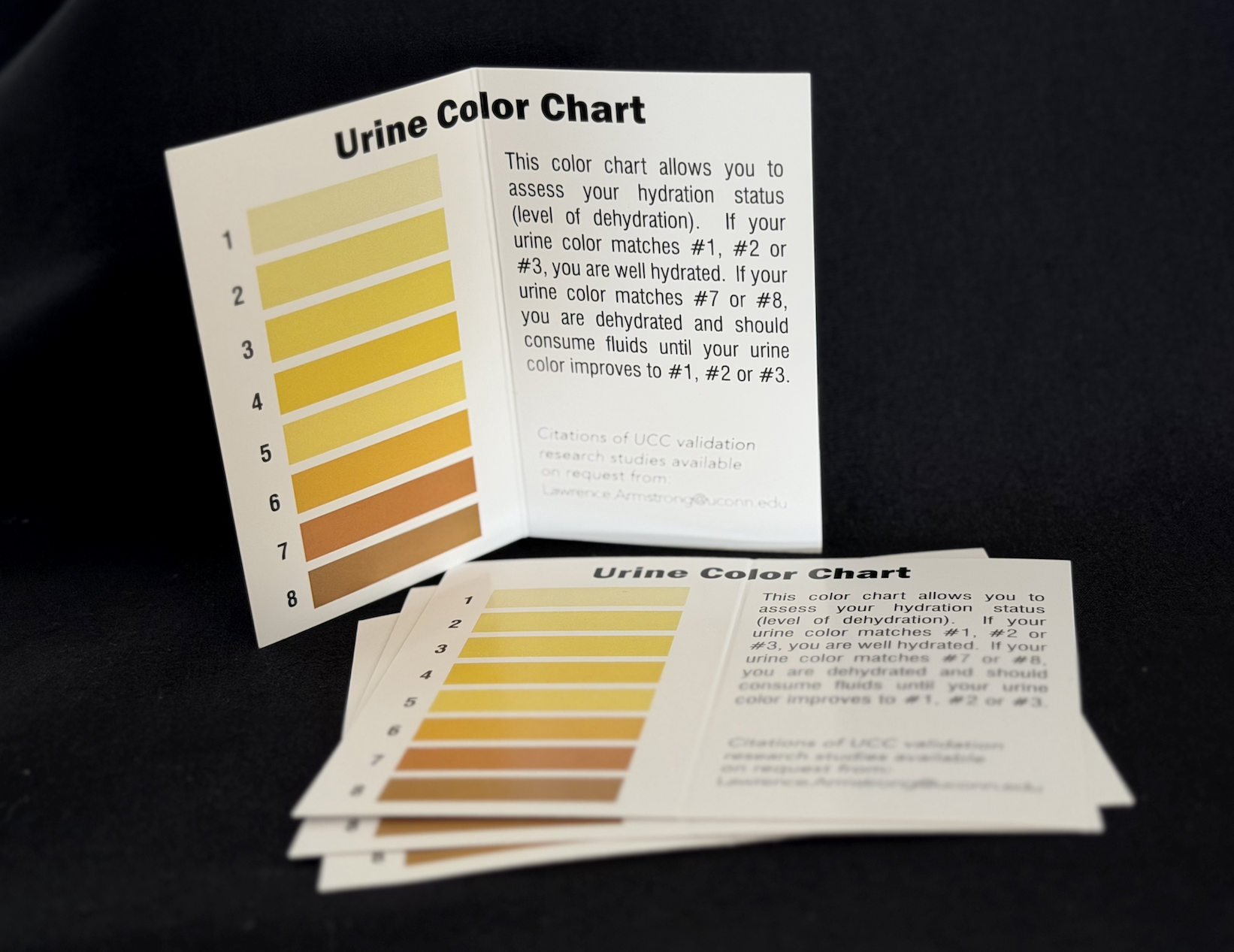
Drink small amounts of water frequently throughout the day before you get thirsty. Check your urine color before, during, and after work. Your urine should look more like lemonade than apple juice. Urinating five to seven times a day and pale yellow urine are signs that you are drinking enough water.
Check your body weight each morning. If you’ve lost more than 2% of your weight, it's likely you are dehydrated.
For heavy or extended work (more than two hours) in hot, humid conditions, use electrolyte powders, drinks, or popsicles to replace salt and minerals lost through sweat. Avoid alcohol, soda, and energy drinks, which can contribute to dehydration and increase your risk of heat illness. Maintain your electrolyte levels with regular, balanced meals.
Your urine should look more like lemonade than apple juice. You can request a free urine color chart from Lawrence.Armstrong@uconn.edu.
Take Breaks
Take frequent breaks in shaded or air-conditioned areas. Rehydrate and use ice-cold or wet towels, misting fans, or cooling vests or clothing to cool as much of your body’s surface as possible. If possible, complete strenuous work during cooler times of the day.
Wear Protective Clothing
Wear lightweight, breathable, and reflective clothing, as well as sunscreen, sunglasses, phase-change cooling vests, and neck gaiters under hard hats. If safe, remove protective gear and layers during your rest breaks to help cool down.
Watch for Symptoms
Use a buddy system to monitor yourself and your co-workers for heat illness symptoms (see a detailed list below). Maintain two-way communication with your supervisor at all times.
Take extra caution when you are new to the job, wearing new personal protective equipment (PPE), and when you return from extended leave. You are less acclimated to your environment and at greater risk for heat illness.
Seek Help
Seek immediate help and medical attention if you or your co-workers experience symptoms of heat illness. Heat stroke is a medical emergency, and identifying it as soon as possible can increase survival outcomes. (See a detailed list of symptoms below.)
Report any concerns about workplace health and safety practices to your supervisor, safety manager, HR leader, or other designated contact.
Monitor Your Environment
Your job site may use the wet bulb globe temperature (WBGT) or heat index (HI) to monitor environmental changes and assess risk. It’s important to understand the differences between the two, especially how they are measured and what safe levels are for each.
You can use weather forecasts and on-site monitoring tools — such as the AIHA Heat Stress App or OSHA-NIOSH Heat Safety Tool App — to anticipate heat risks each day. When the estimated WBGT or heat index is high, be extra cautious.
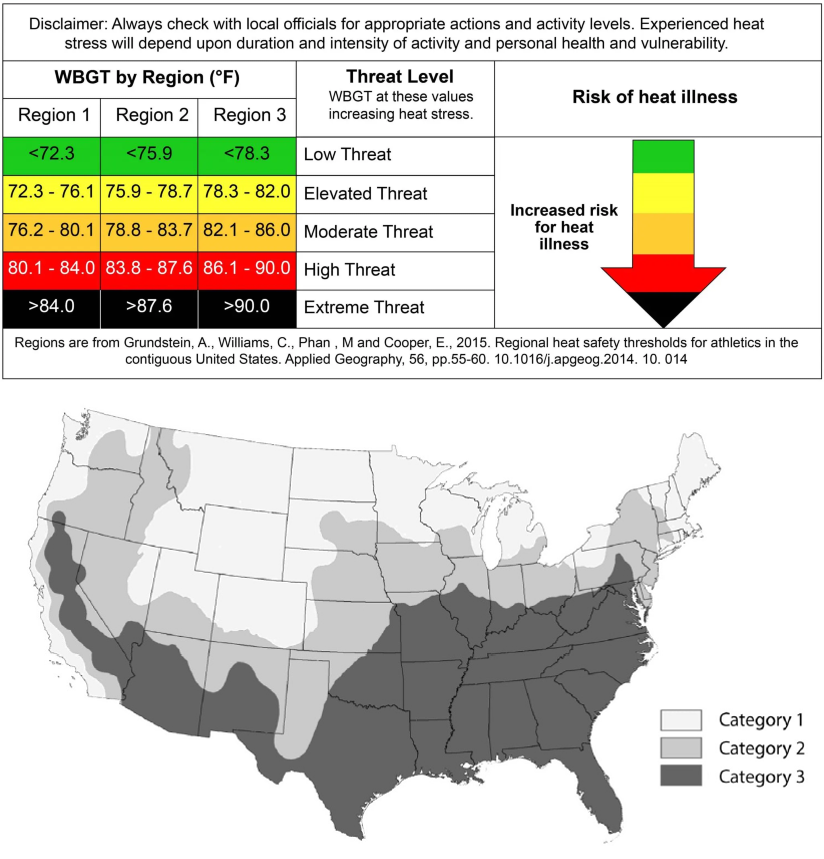
An on-site WBGT meter is the most accurate way to measure heat stress. It accounts for temperature, humidity, wind speed, and radiant heat from surfaces like asphalt and machinery. For example, asphalt can exceed 140°F even when air temperatures are only 86°F.
WBGT also recognizes differences between regions of the country and has region-specific and work intensity thresholds for assessing risk.
Heat Index
The heat index measures how hot it feels outside based on air temperature and humidity. However, the HI doesn’t account for radiation or air flow.
Recognizing Signs of Heat Illness
Monitor yourself and your colleagues for signs of heat illness, including sunburn, heat rash, heat cramps, and dehydration. Pay special attention to signs of heat exhaustion and heat stroke, including physical symptoms and changes in behavior. If you see symptoms, act fast.
Heat Exhaustion
Heat exhaustion occurs when the body loses too much water and salt, usually through excessive sweating.
Signs and Symptoms
Inability to continue work
Excessive tiredness/fatigue
Thirsty
Weak
Dizzy
Vomiting
Lightheaded
Muscle cramps
Wobbly walking
Slow reaction time
Blurred vision
Nausea
Fast and weak pulse
Act Fast
Move to a cool place.
Lie down and elevate your legs.
Take frequent sips of cool water.
Loosen or remove unnecessary clothing, including shoes and socks.
Cool your body with ice, cold towels, or fanning.
If your symptoms persist or worsen, get immediate medical attention on-site, go to your nearest urgent care clinic or emergency room, or call 911.
Exertional Heat Stroke
Exertional heat stroke is the most serious heat-related illness. It occurs when core body temperature reaches dangerously high levels and can lead to death or permanent disability. The faster you act, the higher the chances of survival. Call 911 right away.
Signs and Symptoms
Body temperature over 104.5 degrees Fahrenheit
Confusion or disorientation
Erratic or irritable behavior
Collapsing/fainting
Loss of consciousness
Vomiting
Garbled speech or gibberish
Convulsions
Severe fatigue
Nausea
Rapid and strong pulse
Sweating profusely (this may not occur in cases of classic heat stroke)
Act Fast
CALL 911.
Stay with the person until emergency medical care arrives.
Move the person to a cooler place and remove their outer clothing.
Put the person in a tub or kiddie pool with ice water immediately.
If no tub is available, rotate ice-cold towels over the surface of their body while fanning them.
This guide was developed by the Health Action Alliance in collaboration with the Korey Stringer Institute (KSI) at the University of Connecticut, with guidance from the following contributors:
Gabrielle J. Brewer, is Associate Director of KSI at the University of North Florida. Dr. Brewer is also the Vice Chair of the Thermal Stress Working Group at the American Industrial Hygiene Association (AIHA) and has provided heat safety education to a variety of companies, including NASA and Delta. She manages U.S. Department of Defense, Defense Advanced Research Projects Agency (DARPA), and corporate-sponsored grants focused on integrative physiology to improve health, safety, and performance of athletes, warfighters, and workers.
Douglas Casa, PhD, ATC, is CEO of KSI. Dr. Casa, a Board of Trustees Distinguished Professor of Kinesiology at the University of Connecticut, is an expert on maximizing performance during exercise in the heat and the prevention, recognition, and treatment of exertional heat stroke. Dr. Casa has successfully treated 425 cases of exertional heat stroke with zero fatalities, and has provided heat safety expertise to the International Olympic Committee, among other organizations.
Robert Huggins, PhD, LAT, is Chief Research Officer and President of Occupational Safety and Athlete Performance at KSI. Dr. Huggins provides heat safety policy and risk mitigation services and expertise to the airline, food, construction, manufacturing, and postal delivery service industries. His research focuses on the impact that hot environments have on human physiological responses, including the effects of cooling, hydration, and heat acclimatization.
Maggie Morrissey-Basler, PhD, is Senior Occupational Heat Safety Advisor at KSI and an assistant professor at Providence College. Dr. Morrissey-Basler served on the subcommittee for the A10.50 Voluntary Heat Stress Standard in Construction and Demolitions and has authored over 30 publications on occupational heat stress, hydration, and related topics. Her research focuses on preventing occupational heat stress and heat-related illnesses and injuries in workers. Additionally, she has served as a consultant and expert speaker at industrial conferences and companies, often focusing on enhancing heat stress management plans.
Cecilia Kaufman, MS, is Senior Scientist of Occupational Safety at KSI. Kaufman is also an athletic trainer and serves as the Secretary of the Thermal Stress Working Group at AIHA. Kaufman has provided education and services regarding heat safety policy and risk mitigation to the airline, food, construction, manufacturing, oil and gas, and postal delivery service industries.
DISCLAIMER: This guide provides an overview of workplace health issues and is not intended to be nor should be construed as legal, business, medical, scientific or any other advice for any particular situation. The content included herein is provided for informational purposes only and may not reflect the most current developments as the subject matter is extremely fluid. This report contains links to third-party websites. Such links are only for the convenience of the reader, user or browser; the Health Action Alliance does not recommend or endorse the contents of the third-party sites. Readers of this guide should contact their attorney to obtain advice with respect to any particular legal matter. No reader, user, or browser of this material should act or refrain from acting on the basis of information in this guide without first seeking legal advice from counsel in the relevant jurisdiction. Only your individual attorney can provide assurances that the information contained herein — and your interpretation of it — is applicable or appropriate to your particular situation.
More Occupational Health and Safety Strategies
This guide was created with input from members of the National Commission on Climate and Workforce Health, the strategic advisory board to HAA's Extreme Weather + Work initiative. Extreme Weather + Work provides role-specific resources to help leaders across functions prepare for and respond to extreme weather. Occupational health and safety professionals can find more tips and tools in The OHS Leader's Guide to Extreme Weather Readiness, covering topics such as:
Extreme Weather + Work is an initiative of the Health Action Alliance. We bring together leaders who rarely sit in the same room and connect them with peers across industries, giving them the research and tools they need to support their people before, during, and after extreme weather. Sign up for our monthly newsletter to stay up to date on our latest events, resources, and recommendations. For deeper support, tools, and a peer community, explore Extreme Weather + Work membership.
Sign up for our newsletter to keep updated on HAA’s latest initiatives, insights and recommendations, and be first to receive new resources and event invitations.










.png)


.svg)


