


Newsletter from U.S. Business Action to End HIV, providing the latest actions from the coalition, together with other important news.
.png)


Editorial Note: You can stay informed and receive our monthly Action Report newsletter directly to your inbox by joining the mailing list.

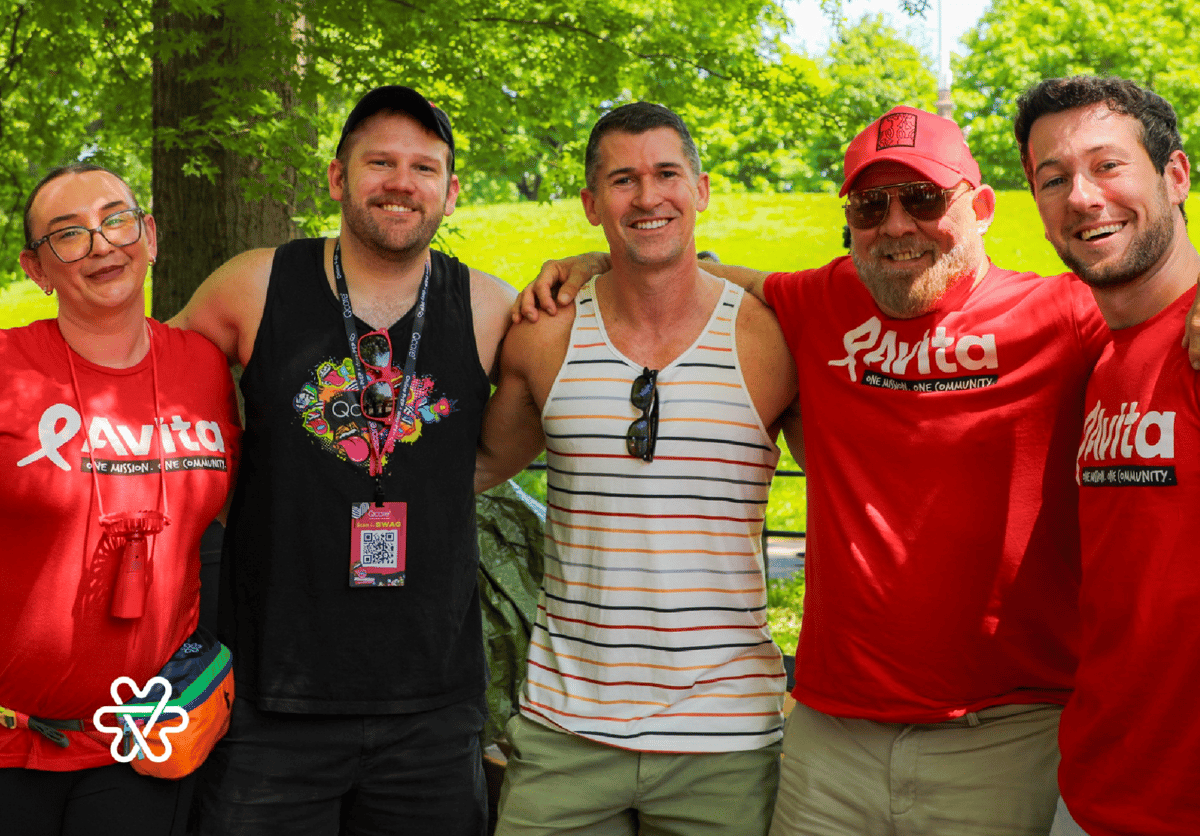
The decisions being made right now — in Congress, in statehouses, in corporate boardrooms — will shape the HIV epidemic for years to come. This month, Coalition members met that moment from traveling to Washington in support of critical federal programs, mobilizing at AIDS Walk New York, and preparing employers to take action ahead of National HIV Testing Day.
Here's a look at what we accomplished together and what's coming next.
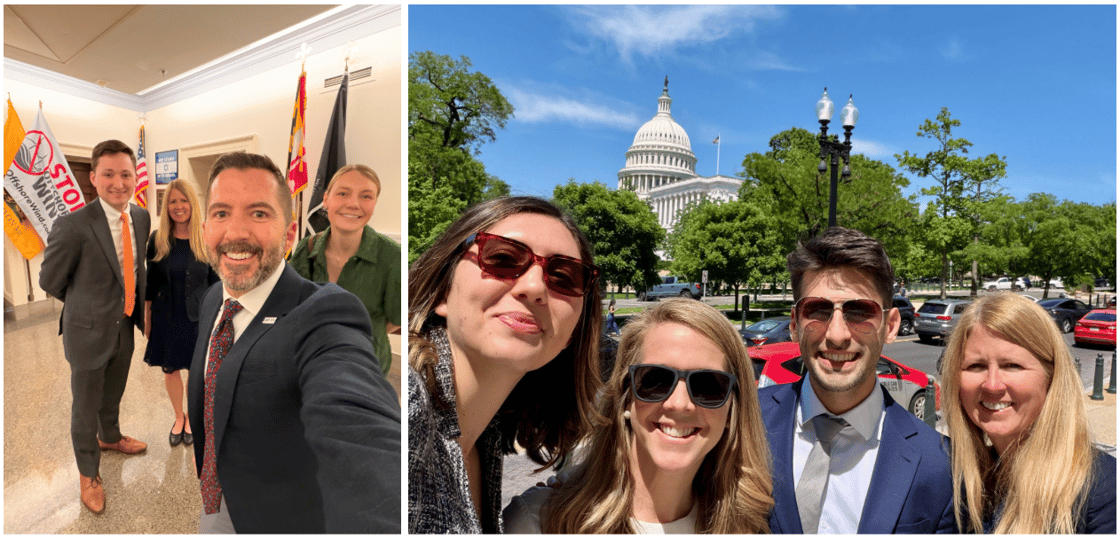
As Congress works toward fiscal year 2027 appropriations, U.S. Business Action to End HIV is elevating the voices of businesses committed to helping our nation end the HIV epidemic.
This month, the Coalition sent a letter to Senate and House Appropriations leadership underscoring the importance of expanded appropriations for the Ryan White HIV/AIDS program, the AIDS Drug Assistance Program (ADAP), CDC's Division of HIV Prevention, and the Ending the HIV Epidemic (EHE) initiative. These programs can make President Trump's goal to end the HIV epidemic in the U.S. by 2030 achievable.
In addition to sending the letter, a delegation of business leaders traveled to Washington, D.C., on May 12 to meet with Republican lawmakers on the House Appropriations Subcommittee on Labor, Health and Human Services, Education, and Related Agencies (Labor-HHS), making the business case directly for sustained investment in HIV prevention, treatment, and care.
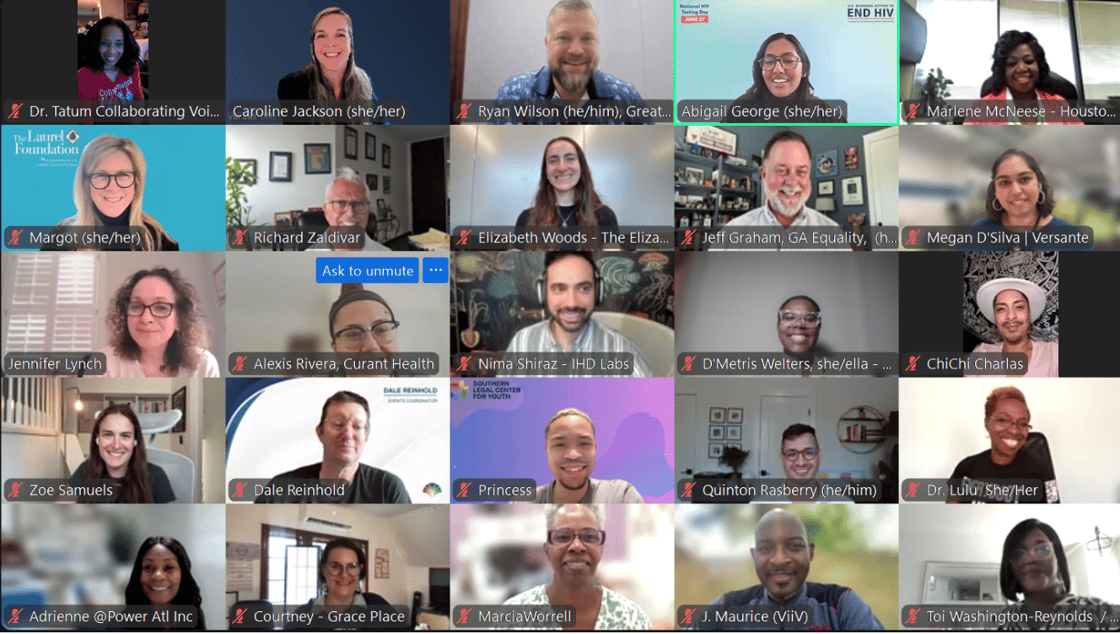
On May 5, members of our Atlanta, Houston, and Los Angeles Chapters came together virtually for our 2026 Spring Chapter Connect — a one-hour session designed to deepen local connections and sharpen strategies for the work ahead.
Members heard updates on the federal HIV policy landscape and convened in local chapter breakouts to exchange ideas, align on priorities, and strengthen the partnerships that make this work possible at the community level. We're grateful to everyone who joined and energized by the momentum heading into a busy season of action.
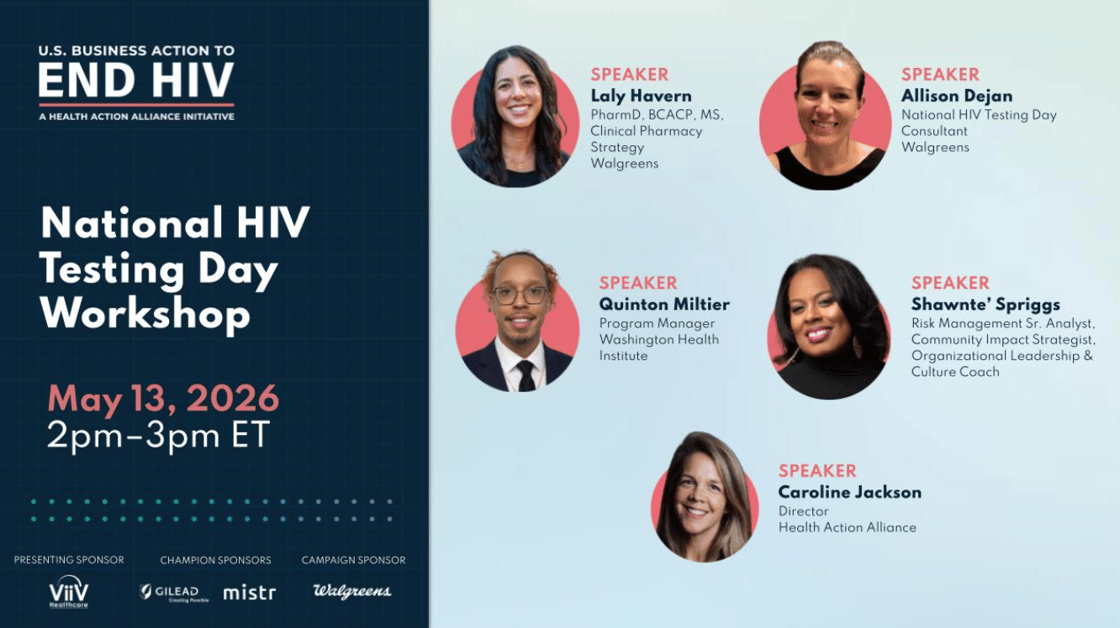
On May 13, business leaders joined the Coalition's fourth annual National HIV Testing Day Workshop for Employers. Co-hosted by HIV Leadership Advisory Council member Shawnte’ Spriggs, the session featured a real-world business-community partnership case study from Walgreens, alongside structured planning time that sent participants home with concrete next steps tailored to their organizations.
National HIV Testing Day is June 27, and there's still time to put your plan into action. Check out the latest National HIV Testing Day Playbook for Employers for ideas on how you can get your workplace involved and make an impact.
Missed the event? Watch the webinar on demand to learn more about why this work matters, what resources are available, and how companies like Walgreens are stepping up for National HIV Testing Day.
Employer-sponsored health plans, workplace culture, and stigma all shape whether people get tested, stay in care, and achieve healthy outcomes. Employers have a unique opportunity to support public health efforts and improve workforce well-being.
Here are six ways to get started:
Take action on June 27 with the refreshed National HIV Testing Day Playbook for Employers. This go-to resource provides tips and best practices for planning meaningful engagement within your company and community.
It also features real-world case studies from member companies IHD Lab, Match Group, Mercer, Paramount, Walgreens, and ViiV Healthcare, showcasing how they take action on HIV and promote testing. This resource was made possible with support from Walgreens.
.png)
AIDS walks bring together thousands of people each year in communities across the U.S. to raise funds and awareness for HIV services. For companies, participating is straightforward and high-impact: register an employee team, sponsor a local event, or promote the walk through internal channels. It's a direct way to connect your HIV commitment to the community where your employees live and work. Email us at endhiv@healthaction.org to find a walk near you.
.png)
“Perspectives” is a series that highlights our advisors who are leaders in the HIV field and provide guidance to the Coalition, ensuring that our priorities are informed by the latest scientific research and best practices.
.png)
Executive Director
Trans Women of Color Healing Project
My dedication to this work is deeply personal. I've lost family, friends, and loved ones to the HIV epidemic, and those losses shaped my understanding not just of HIV, but of the pain and silence so many people carry every day. Over time, I came to understand that the greatest barrier is rarely medicine or access alone — more often, it's stigma. The fear of judgment, rejection, and shame has kept people from seeking care, disconnected them from support, and in many cases, cost them their lives.
What's also stayed with me is the power of intentional care and human connection. I believe love, dignity, and culturally affirming spaces can be real catalysts for healing. My commitment is to help create environments where people living with HIV are seen beyond their diagnosis — where their voices, experiences, and humanity are centered in the systems designed to serve them.
What feels different about this moment is that communities are realizing we can no longer afford to operate in silos or rely on systems that have repeatedly failed us. This moment requires more honesty, more collaboration, and more intentional trust-building — between communities, organizations, institutions, and businesses. We have to be willing to dismantle systems that have caused harm while building new ones rooted in dignity, accountability, and shared responsibility.
That's where the role of business becomes critically important. Businesses have influence, resources, and the ability to help shape culture at scale. But communities want more than visibility campaigns. They want to know corporations are genuinely invested in their lives and futures. That means listening to lived experience, investing in community-rooted leadership, and creating long-term partnerships that don't evaporate after a moment of public pressure. Transgender people are leaders, innovators, caregivers, and contributors to science, culture, public health, and social progress — and we deserve to be treated as partners in building the future, not as political talking points.
Show up intentionally. If your company can donate financially, that support makes a direct impact on organizations doing frontline work every day. If that's not possible, there are still powerful ways to contribute: donate time, expertise, volunteers, or platforms. Lend your voice. Share your networks and audiences with community-based organizations already trusted by the people most impacted.
This year, TWOCHP is a beneficiary organization for AIDS Walk Atlanta — donations made to us will be matched through AHF, giving businesses a direct way to strengthen community-rooted HIV prevention and support services. But beyond any single opportunity, what matters most is consistency. When companies invest in Black and Brown transgender and gender-diverse communities not just during awareness moments, but all year long, it sends a clear message: your lives are a priority, not an afterthought.
.png)
New CDC data shows modest progress in HIV care outcomes in 2024 — with 83% of newly diagnosed individuals linked to care within a month and viral suppression rising to 69% — but significant gaps remain, including 22% of new diagnoses occurring at the AIDS stage. With over 1.2 million Americans living with HIV and nearly 39,000 new diagnoses last year, the CDC is accelerating efforts across testing, treatment, and prevention to meet national goals for ending the epidemic. (CDC)
Scientists have achieved a promising milestone in HIV treatment, with two patients maintaining undetectable virus levels for up to nearly two years after a single infusion of engineered immune cells, no daily medication required. While the approach is years from widespread availability, researchers see it as a potential "functional cure" that could offer lifelong HIV control, particularly for those treated early in infection. (New York Times)
Florida legislators reached a deal to restore the state's AIDS Drug Assistance Program after cuts earlier this year slashed eligibility from 400% to 130% of the federal poverty level, stripping coverage from more than 12,000 residents. The agreement restores original eligibility thresholds, brings back key medications including Biktarvy, and allocates $75 million in funding, though advocates remain opposed to a new 21,000-participant enrollment cap. (CBS)
.png)
The Health Action Alliance is solely responsible for the content of this page and maintains full editorial control of its resources.
U.S. Business Action to End HIV was founded in 2022 by the Health Action Alliance, with support from ViiV Healthcare, to mobilize a growing coalition of private sector partners committed to filling gaps and accelerating progress to help end HIV in the U.S. by 2030.
The Health Action Alliance is a unique collaboration between leading business, communications, and public health organizations to help employers navigate evolving health challenges, improve the health of workers, and engage with public health partners to build stronger, healthier communities. Founded in 2021 by the Ad Council, Business Roundtable, CDC Foundation, the de Beaumont Foundation, and the Robert Wood Johnson Foundation, HAA's network now includes more than 11,000 employers nationwide, reaching a quarter of U.S. workers.

Sign up for our newsletter to keep updated on HAA’s latest initiatives, insights and recommendations, and be first to receive new resources and event invitations.
Sign up


.svg)


