


"Leading By Example” is a series from U.S. Business Action to End HIV highlighting inspiring business leaders accelerating progress toward an end to the HIV epidemic in the U.S.
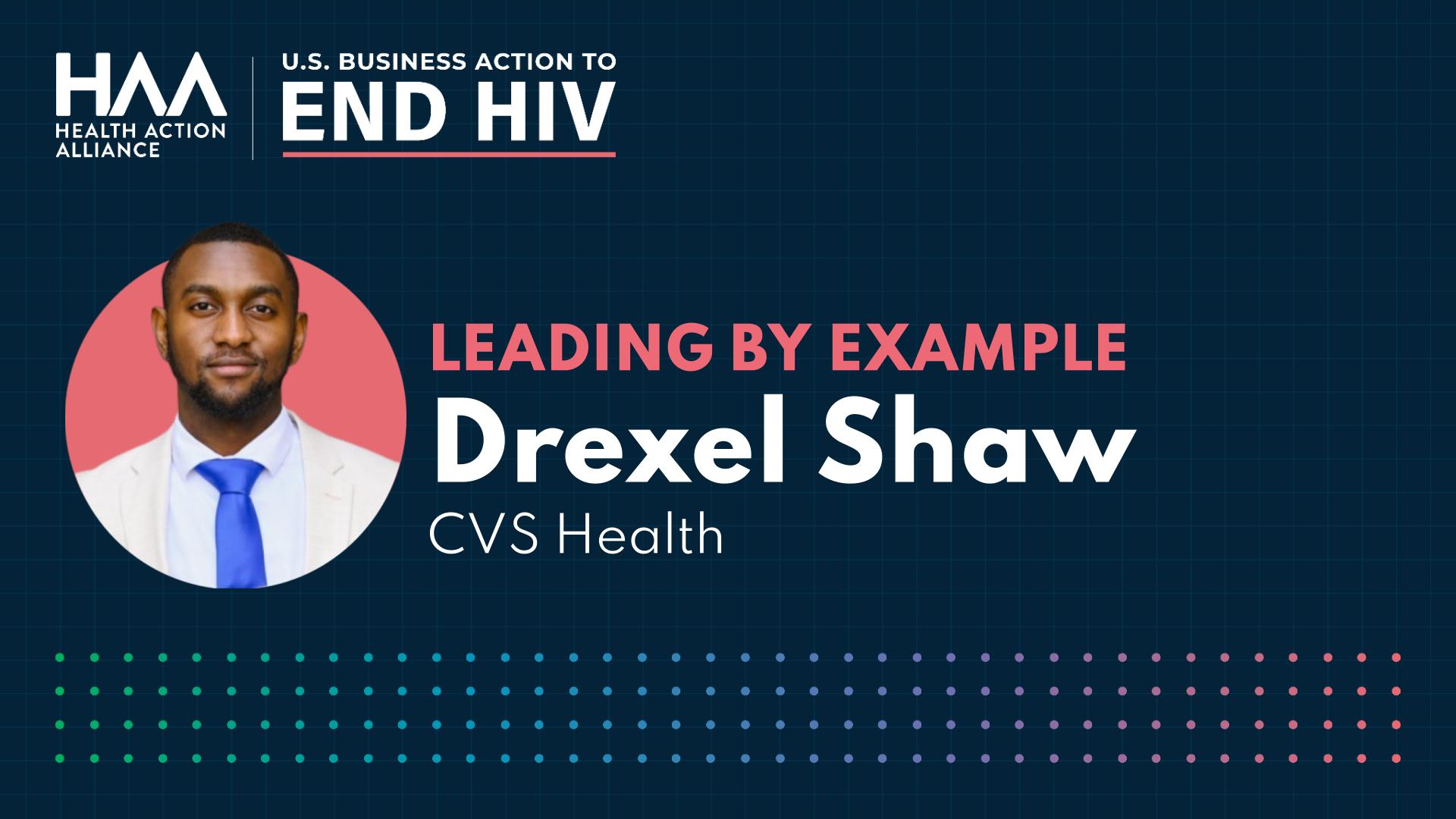



This month, we are pleased to spotlight Drexel Shaw, National Patient Advocacy Manager at CVS Health.
Drexel Shaw, MPH, is a National Patient Advocacy Manager at CVS Health, where he advances enterprise strategies to reduce health disparities in underserved communities. With more than a decade of experience in public health, infectious disease, and patient advocacy, Drexel has partnered with CDC-funded and state HIV programs and supported equity-focused initiatives across specialty pharmacy and healthcare operations.
Drexel has spoken on national platforms including White House roundtables, NBC, radio, and podcasts where he discusses HIV prevention, treatment access, and community engagement. He holds a Master of Public Health from West Chester University and is committed to improving access to high-quality, culturally responsive care for vulnerable populations.
At CVS Health, our purpose is to simplify health care one person, one family, and one community at a time. Because we’ve been embedded in communities since day one, trust, accessibility, and innovation guide how we show up. We lead with care, accountability, and a commitment to safety and quality, all of which are essential in communities disproportionately impacted by HIV.
We’re leveraging our nationwide footprint to reduce barriers to HIV education, testing, prevention, and treatment by working with cross‑sector partners including community-based organizations, health departments, employers, and advocacy groups. Through our retail presence, digital platforms, and clinical services, we’re able to amplify awareness, expand access points, and bring resources closer to where people live and work.
Technology and data also help us identify high‑prevalence ZIP codes and tailor interventions that meet the needs of the communities most affected by HIV. This localized approach allows us to align CVS Health’s reach with evidence‑based strategies that strengthen the continuum of HIV care and advance health equity.
CVS Health is most proud of the meaningful progress we’ve made as a corporate leader in the HIV space and the collaborative initiatives we’ve been able to stand up with partners across the industry. By working closely with manufacturers, patient advocacy organizations, academic research institutions, and community groups, we’ve positioned ourselves as a trusted partner of choice.
These partnerships have allowed us to advance innovative programs, expand access points, and help reduce barriers across the HIV care continuum. We’re proud of the momentum we’ve built and equally proud of the collective impact we’ve achieved alongside organizations committed to ending the HIV epidemic.
We believe that corporate leadership in the HIV space demonstrates a meaningful commitment to the people and communities who trust us. Being part of the U.S. Business Action to End HIV coalition reinforces that responsibility and keeps us accountable to show up with compassion, empathy, and purpose for our customers and colleagues, many of whom are directly impacted by HIV.
The Coalition also provides a valuable platform for collaboration. By working alongside other businesses, we can share insights, learn from one another, and help create the conditions necessary to improve health outcomes. These partnerships strengthen our ability to address stigma, expand awareness, and support evidence‑based approaches that advance the nation’s efforts to end the HIV epidemic.
Businesses have a critical role to play in ending the HIV epidemic from both a societal and an economic perspective. Employers influence the health benefits their workforce depends on, which directly affects access to HIV prevention, testing, and treatment. Just as importantly, businesses shape workplace culture, and culture strongly impacts non‑clinical factors like stigma.
Stigma remains one of the biggest barriers to getting tested, starting treatment, staying on treatment, or even considering prevention. Corporate leadership can help normalize conversations about HIV, reduce stigma, and create supportive environments where employees and communities feel informed and empowered. When businesses engage, they strengthen public health efforts and help build the cultural conditions needed to truly end the epidemic.
Sign up for our newsletter to keep updated on HAA’s latest initiatives, insights and recommendations, and be first to receive new resources and event invitations.
Sign up


.svg)


