By clicking “Accept”, you agree to the storing of cookies on your device to enhance site navigation, analyze site usage, and assist in our marketing efforts. View our Privacy Policy for more information.
The Business Case: Why Extreme Weather Readiness Matters for Sustainability
Sustainability’s role is to show organizations why investing in resilience is good business. Here’s why you should start prioritizing workers in your strategy.
Sustainability leaders spend less time now arguing that climate risk is real and more time proving that adapting and responding to extreme weather risks pays for itself.
Companies have reported $1.47 trillion in physical environmental risks, yet only 9% of them say they invested in physical adaptation last year (CDP, 2026). In fact, only 42% of companies in S&P Global’s 2025 Corporate Sustainability Assessment have an adaptation plan at all (C2ES, 2026).
This overview of extreme weather data and real-world impacts aims to help sustainability leaders make the case that investing in workforce readiness is smart business.
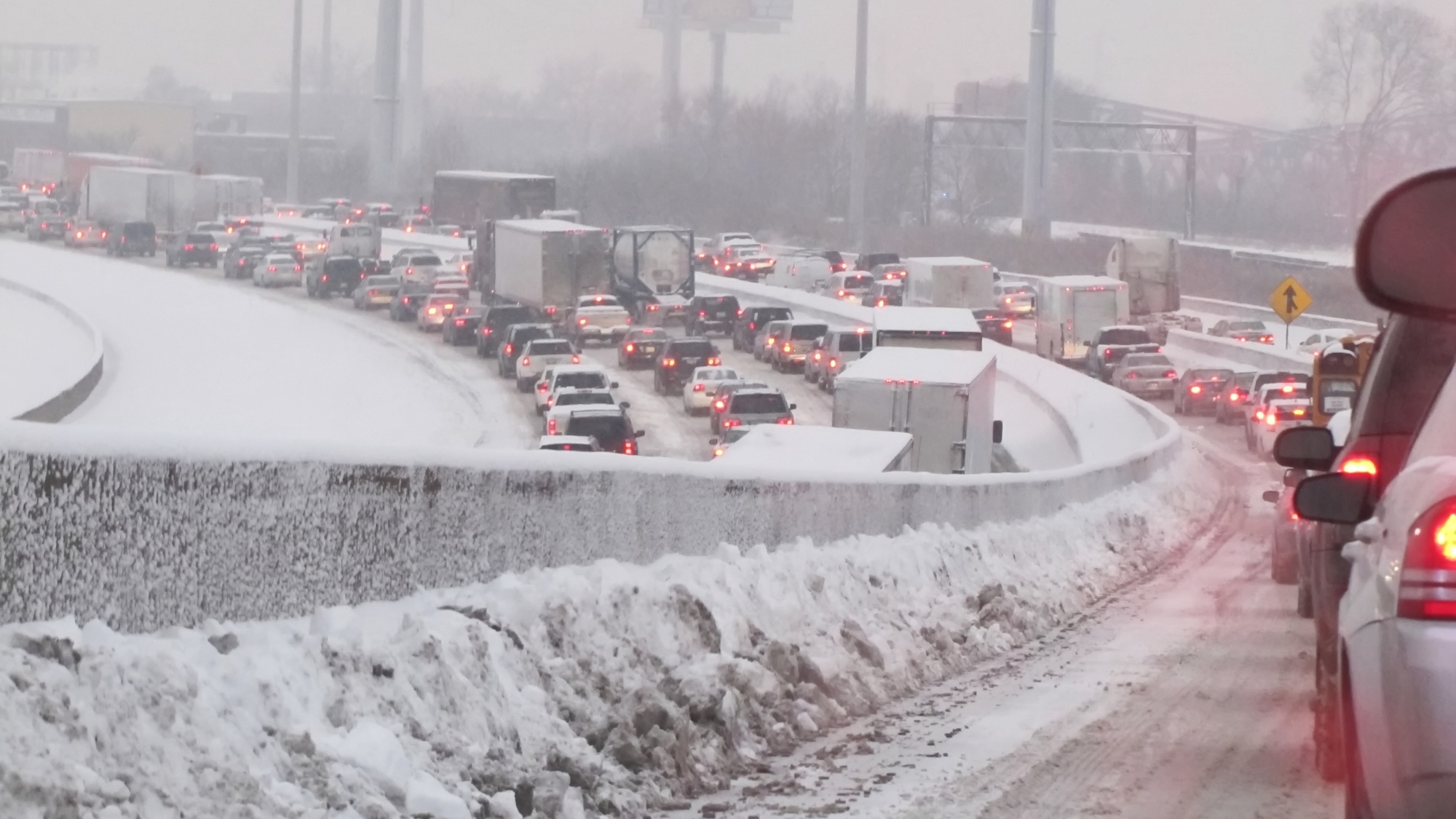
People are missing work. In the U.S., 82% of workers say they were affected by a weather-related disruption at work in the past year, and nearly one in three could not work at all because of power outages or building closures (Switch 5*, March 2026).
Productivity is impaired. 63% of workers say that extreme weather has reduced their productivity at work. (Switch 5*, March 2026). And employers agree: 39% report lost employee productivity due to extreme weather impacts (MIT Technology Review, 2024).
Safety incidents are rising. Workplace injury rates begin rising at temperatures as low as 85°F, driving more workers' compensation claims. There were roughly 29,000 additional injuries attributable to extreme heat in 2023 alone (Environmental Health, 2025).
Healthcare costs are increasing. 63% of employers report rising insurance costs and premiums linked to extreme weather (MIT Technology Review, 2024).
Adaptation Investments Pay Off
The returns are documented. Analyzing 320 adaptation investments across 12 countries, the World Resources Institute found that every $1 invested returns more than $10.50 in benefits over 10 years (World Resources Institute, 2025).
Investors are rewarding resilience. Companies with lower physical climate risk have an edge, outperforming peers with higher climate risk exposure by as much as 1.7 times in shareholder returns (C2ES/Systemiq, 2026).
Resilience can reduce insurance costs. Insurance leaders increasingly say rewarding resilience, not just penalizing risk, is where the industry is headed (Aon, 2026). One major commercial insurer has issued $825 million in premium offsets since 2022 to clients who invest in resilience improvements (FM, 2025).
The gains show up whether or not disaster strikes. Adaptation generates value through productivity, health, and continuity improvements. Among companies that have invested in operational resilience, 82% report positive financial or reputational results, including stronger internal buy-in, better insurance terms, and improved access to capital (C2ES/Systemiq, 2026).
Workforce Exposure Is Becoming a Disclosure Question
Workforce health and safety is already a disclosure requirement in the EU. The European Sustainability Reporting Standard (ESRS) requires companies to disclose workplace injury, illness, and fatality rates, along with what share of their workforce is covered by a health and safety plan. The standard also requires certain health and safety disclosures for value-chain workers (EUR-Lex, 2025).
A global standard-setter is weighing whether to do the same. The International Sustainability Standards Board (ISSB) — which sets voluntary climate standards adopted by countries around the world — is running a research project through 2026 to determine whether it should require human capital disclosures around turnover, training, working conditions, and workplace health and safety (IFRS).
Markets are already reacting to these disclosures. An analysis of SEC filings found that after a weather-related disclosure, more than half of companies miss revenue growth expectations within a year, and their stocks underperform by an average of 2.7% within 30 days (Center for Climate and Energy Solutions, 2026).
Adaptation Holds Up When the Politics Don't
The public already expects corporate action on extreme weather. 68% of Americans say corporations should be doing more to address global warming. Fewer say the same about federal, state, or local government actors or individuals themselves (Yale Program on Climate Change Communication, 2026).
Worker protection is a more durable approach to sustainability efforts: Climate language has become harder to use in some rooms, and sustainability teams have absorbed that in the form of renamed programs, halted projects, and shrinking budgets. But grounding sustainability work in worker health and safety can prove value and keep the work funded and staffed, regardless of how people feel about emissions or 2050 targets. Keeping people safe in extreme heat, maintaining operations through a storm, and planning for facility closures are sustainability efforts that read as safety, continuity, and duty of care.
*This survey was conducted by Switch 5 in partnership with the National Commission on Climate and Workforce Health, the strategic advisory board that supports Extreme Weather + Work.
Workforce readiness requires coordination across teams. Explore guides designed for more functions at your organization, and learn more about the Extreme Weather + Work initiative.
Human Resources (HR) Readiness strategies for HR focus areas including benefits design, leave policies, people analytics, and more.
Extreme Weather + Work Home Learn how your organization can support workers before, during, and after extreme weather.
About Extreme Weather + Work
Extreme Weather + Work is an initiative of the Health Action Alliance. We bring together leaders who rarely sit in the same room and connect them with peers across industries, giving them the research and tools they need to support their people before, during, and after extreme weather.
Sign up for our newsletter to keep updated on HAA’s latest initiatives, insights and recommendations, and be first to receive new resources and event invitations.






.png)


.svg)


