By clicking “Accept”, you agree to the storing of cookies on your device to enhance site navigation, analyze site usage, and assist in our marketing efforts. View our Privacy Policy for more information.
The workers most exposed to extreme weather are often the ones you don’t directly employ. Here's how to use codes, contracts, and sourcing decisions to support them and extend workforce resilience across your operations.
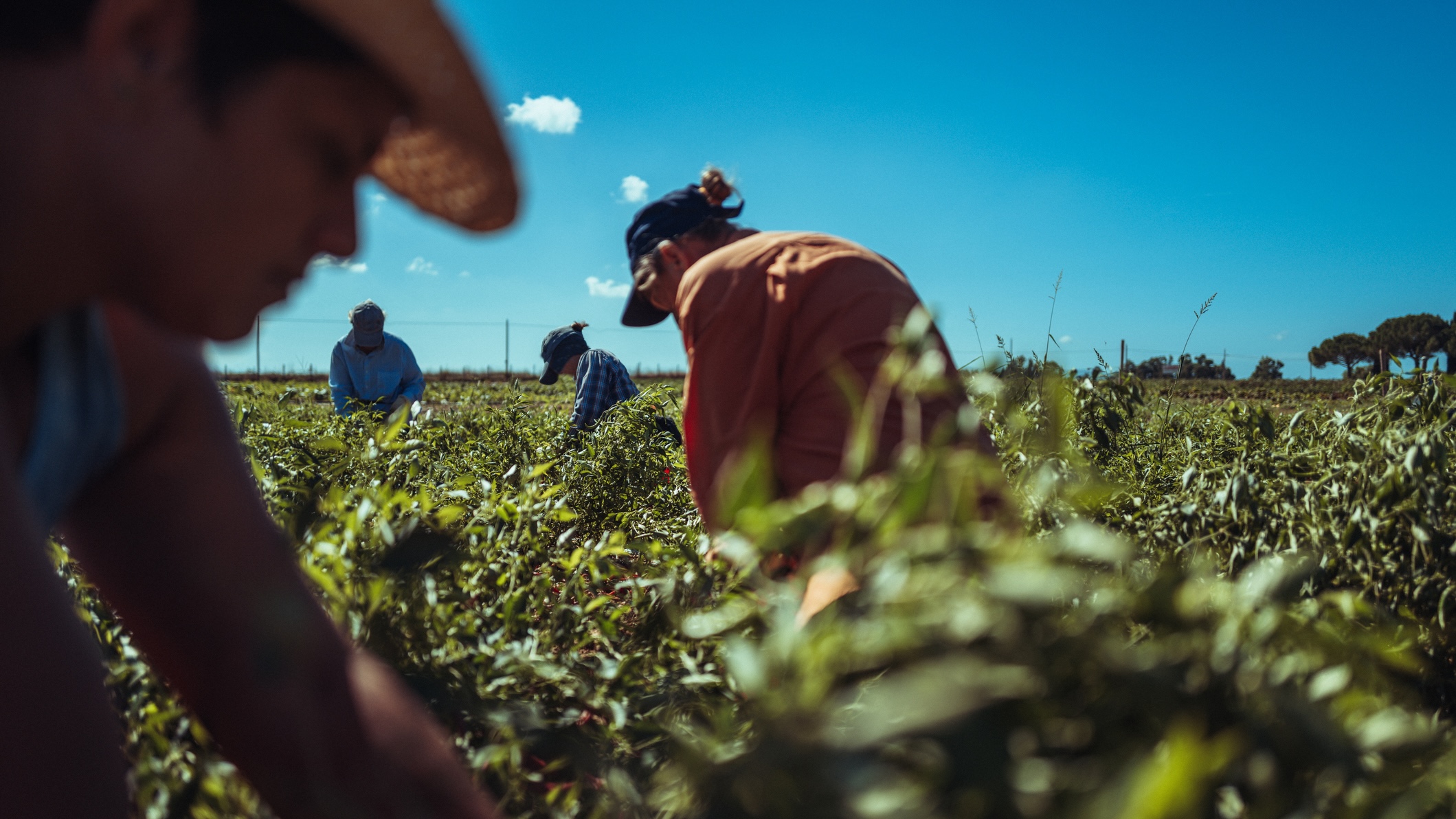
For many organizations, people most exposed to extreme weather risks — in agriculture, construction, logistics, food processing, and manufacturing — are often deep in your supply chain, doing physical work in hot, storm-prone, or smoke-affected conditions.
As sustainability teams increasingly own supplier codes of conduct and procurement criteria, you're likely facing more pressure to account for supply chain worker health in your reporting frameworks. This guide helps you adapt the procurement codes, contracts, and assessments you're already using so you can support and set expectations for workers your company doesn't directly manage — and shape conditions across an entire value chain.
Assess your existing suppliers. Rank them using factors you likely already track. For worker exposure, look at sector (outdoor, physical, or heat-generating work carries the most risk) and geography (hot, humid, flood-, fire-, or storm-prone regions). For business importance, look at spend (how much you buy) and criticality (how hard the supplier is to replace). Suppliers that rank high on both are where your efforts can do the most good. To save research time, check whether a supplier is publicly traded or subject to climate disclosure requirements. If so, some of its physical risk information may already be public.
Write extreme weather worker protection into your supplier code of conduct. Set a standard you can point to for every new supplier relationship, and start raising it with the existing suppliers you identified above. At minimum, ask suppliers to maintain a plan for protecting workers during extreme heat, poor air quality, and severe weather; to provide water, rest, and cooling for physically demanding work; to let workers stop work in dangerous conditions without penalty or lost pay; and to communicate those protections to workers in a language they understand.
Ask the right questions before you sign or renew. Add a short set of extreme weather questions to your requests for proposals (RFPs) and supplier prequalification. Asking before a contract exists signals that this shapes who you choose. A working set to adapt based on the type of supplier and your relationship to them:
Do you have a written plan to protect workers during extreme heat, wildfire smoke, or severe weather? Please summarize or attach it.
How do you monitor heat index, wet bulb globe temperature, and air quality index at worksites, and what thresholds change how or whether work happens?
For outdoor or physically demanding work in high heat, what protection do you provide to employees (e.g., water, paced rest, shade or cooling, adjusted hours)?
How are workers trained to recognize and respond to heat illness and other weather-related health risks?
Can workers stop work in unsafe conditions without losing pay or facing penalties, and how is that made clear to them?
How are temporary, seasonal, and subcontracted workers protected?
Have you had extreme weather-related disruptions or worker health incidents in the past three years, and what changed as a result?
How do you address dangerous commutes during inclement weather?
Anchor to a standard your suppliers already recognize. You don't have to write heat and weather rules from scratch. Point your code and RFP questions at established health and safety standards suppliers already know — such as ISO 45001 for occupational health and safety, or the International Labour Organization's (ILO) core standards — and layer your extreme weather specifics on top. This gives suppliers a familiar reference point and gives you a defensible foundation without too much heavy lifting.
Tell suppliers why, not just what. Include a short note or a slot in a supplier webinar you already run explaining that protecting workers in extreme weather also protects the continuity you both depend on. Suppliers who understand the reasoning are more likely to act on the requirement than to route around it.
Start with one high-exposure category. You don't have to reach the whole supply base at once. Pick your single most-exposed category — e.g., agricultural labor, construction trades, or last-mile logistics — and incorporate RFP questions and exposure mapping there first. A focused pilot gives you a working model to extend, and it fits the reality of a lean team that can't do everything in one cycle.
Build On It
Give worker protection real weight in sourcing decisions. Add extreme weather worker protection as a weighted line in your supplier scorecard alongside price, quality, and delivery, with enough weight to affect who wins the business. You may already be doing something similar if your supplier code of conduct requires adherence to certain greenhouse gas standards and targets. Protecting workers should be part of how suppliers compete for your contract, and they should provide evidence for how they do so.
Fold specific checks into the audits you already run. Add extreme weather items to your existing supplier audits or third-party assessments. On a site visit during hot season: Is there shade and water where people work? Is a heat or extreme weather plan posted where workers can see it, with clear thresholds for when work should stop?
Set the requirement, then help suppliers meet it. When an assessment surfaces a gap, pair the corrective-action deadline with support or partnerships with other functions. Large suppliers often can absorb new requirements, but a small farm or subcontractor may not be able to without additional training or infrastructure support.
Look beyond your direct suppliers. The workers facing the worst conditions — in fields, quarries, and raw material processing — often sit two or three tiers below the supplier you contract with, not at the tier 1 supplier who's easy to reach. Trace the chain past your tier 1 supplier to see which workers are most exposed, and determine where your efforts will make the biggest impact.
Bring extreme weather into the supplier conversations you already have. In your business reviews with major suppliers, add worker climate resilience to the standing agenda. Discuss how they fared in the last event, what they're improving, and where they need support. This keeps it from quietly fading after the contract is signed.
Lead the Field
Co-invest in resilience with your most important suppliers. When a heat wave shuts down a supplier's production, it's your disruption too. For strategic, high-exposure suppliers, share the cost of the things that protect their workers and your supply at once: cooling infrastructure, protective equipment, worker heat-safety training, or early-warning subscriptions.
Pool resources for the suppliers who can't go it alone. Many of the most exposed workers sit with small suppliers who individually can't afford resilience investments. If you're a larger buyer, help underwrite a shared fund or shared infrastructure — such as mobile cooling stations across a group of sites, a common heat-alert system, or jointly funded training — giving every supplier in the group protections none of them could build alone.
Reward resilient suppliers instead of only policing them. Create a preferred tier, longer contract terms, volume commitments, or an awards program for suppliers that demonstrably protect workers through climate extremes. Turn worker protection into a commercial advantage rather than an extra audit.
Work with other buyers to set a common standard and shared audit. Suppliers often juggle conflicting requirements from their various buyers, plus separate audits for each. Join or start a coalition with other buyers in your industry to agree on a shared standard for worker protection during extreme weather, backed by a single assessment every buyer accepts. A consistent standard raises expectations across a whole sector, and shared auditing spares suppliers the burden of proving the same thing in ten different ways. (The electronics and chemical industries have done this for their supply chains, leading to the Responsible Business Alliance and Together for Sustainability, respectively.)
Write contracts that tighten as climate conditions change. Tie worker protection terms to local climate data, so expectations rise as heat and hazards rise. Pair this with a two-way commitment to share data on how workers are faring, so you find out what's happening to your supply chain in real time, not after something's gone wrong.
Workforce readiness requires coordination across teams. Explore guides designed for more functions at your organization, and learn more about the Extreme Weather + Work initiative.
Human Resources (HR) Readiness strategies for HR focus areas including benefits design, leave policies, people analytics, and more.
Extreme Weather + Work Home Learn how your organization can support workers before, during, and after extreme weather.
About Extreme Weather + Work
Extreme Weather + Work is an initiative of the Health Action Alliance. We bring together leaders who rarely sit in the same room and connect them with peers across industries, giving them the research and tools they need to support their people before, during, and after extreme weather.
Sign up for our newsletter to keep updated on HAA’s latest initiatives, insights and recommendations, and be first to receive new resources and event invitations.








.png)


.svg)


