


Nine in 10 heart attacks are preventable, yet cardiovascular disease still costs employers billions each year. Here's what HR and benefits leaders can do to close the gap.



Heart disease kills someone in the U.S. every 34 seconds and is the leading cause of death both in the U.S. and globally. Last month, HAA joined HRCI’s Alchemizing HR webinar series to lead an employer briefing on the cardiovascular risks that are most often overlooked, what's changed in clinical screening guidelines, and how employers can work with health plan partners to educate their teams on the risks and solutions for better cardiovascular health.
Over 1,600 HR and benefits leaders participated in the July 30, 2026 briefing, titled "Beyond Blood Pressure: Understanding the Heart Risks Affecting Your Workforce." Speakers included Sarah Rauzin, Director of Health Strategy and Insights at the Health Action Alliance, and Georgette Kores, Director of Population Health Management at World Insurance Associates.
Read on for key insights, and watch the full recording here.
HAA's Sarah Rauzin opened by laying out the scope of the problem.
Cardiovascular disease is not just a retiree issue. Nearly half of U.S. adults are living with heart disease, and the American College of Cardiology estimates one in five heart attacks occur in adults age 40 or younger. Despite this, more than half of U.S. adults don't know heart disease is the leading cause of death, both in the U.S. and globally — a gap in public awareness of a fact that's held true for more than a century.
The price tag is steep, and it's climbing fast. Cardiovascular disease costs the U.S. an estimated $627 billion a year in direct medical costs and lost productivity, a figure projected to nearly triple to $1.8 trillion by 2050. Direct patient costs for a single cardiac event can range from $43,000 to $63,000 in the first year alone (adjusted for inflation).
Most heart attacks don't have to happen. An estimated 90% of heart attacks are preventable, and many interventions cost a fraction of what a single catastrophic claim does.
Heart health has to compete for attention. Budget and bandwidth are increasingly stretched, and many employers are focused on more attention-grabbing issues. Cardiovascular risk factors are often silent; an employee can have high blood pressure or high cholesterol and feel completely fine, allowing the condition to worsen for years before it's caught. Without a dedicated heart health strategy, programs that address these risks get scattered across weight management, stress, and diabetes programs instead of being addressed directly.
Many employers are already doing meaningful work. Mental health, weight management, blood pressure control, nutrition, diabetes management, and tobacco cessation are common and valuable investments. But because cardiovascular disease is so multifaceted, several other risk factors tend to fall through the cracks.
Georgette Kores of World Insurance Associates walked through commonly overlooked cardiovascular disease risk factors and why they matter.
The biggest modifiable risk factors haven't changed. Health providers still look at:
These factors interact with one another, which is why a whole-person approach is more effective than treating each number in isolation.
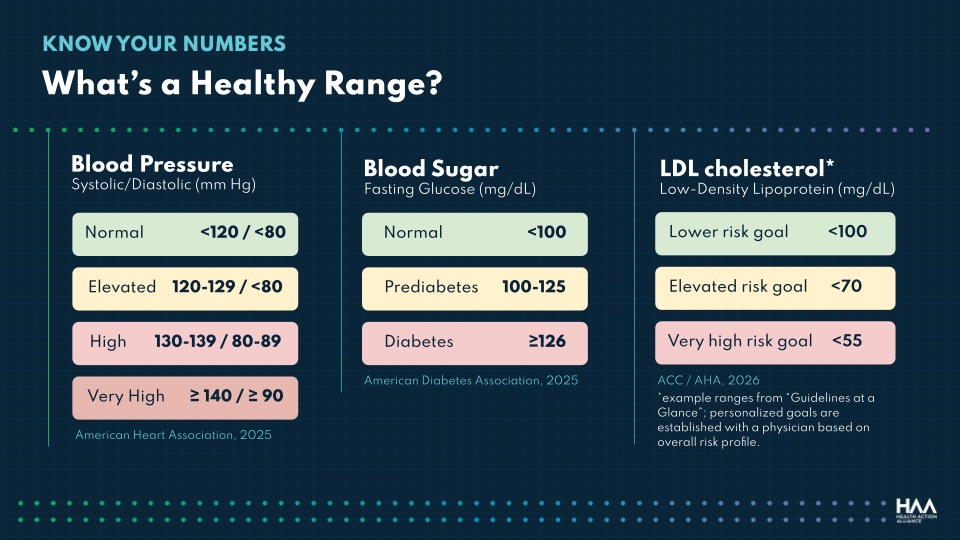
LDL cholesterol is the most overlooked of the big three. The CDC estimates 86 million adults — roughly one in four Americans — have cholesterol high enough to affect cardiovascular risk, yet 45.5% of adults who could benefit from cholesterol medication aren't taking it. The updated 2026 AHA/ACC guidelines call for more tailored, aggressive treatment in higher-risk patients, and Johns Hopkins research suggests that improving lipid-lowering treatment across eligible adults could reduce major cardiovascular events by 21% to 27%.
Family history and ZIP code matter as much as behavior. Siblings of someone with premature cardiovascular disease face a 40% higher risk, and children face a 60% to 75% increased risk, according to the CDC. Familial hypercholesterolemia, a genetic condition affecting about one in 250 people, is significantly underdiagnosed and can produce dangerously high LDL from a young age, regardless of lifestyle. ZIP code, income, and food access are also among the strongest predictors of cardiovascular outcomes, and in some analyses, they're stronger than individual behavior alone.
Cardiovascular risk plays out differently by gender. Men tend to develop coronary heart disease earlier and face stigma around seeking preventive care. Women are more likely to have a heart attack without classic chest-pain symptoms, which delays diagnosis. Hypertensive disorders during pregnancy more than double a woman's later risk of coronary heart disease, stroke, and heart failure, and menopause reshapes body composition, lipids, and vascular health in ways that can significantly raise risk. Women are also most likely to report childcare responsibilities as a top challenge to seeking care.
Sleep and alcohol are frequently missing from cardiovascular strategies. Sleep apnea, which affects 34% of working-age men and 17% of working-age women, is linked to atrial fibrillation, heart failure, stroke, and coronary disease — often undiagnosed because the person experiencing it is asleep when symptoms occur. Night-shift workers face a 40% higher risk of cardiovascular disease than day-shift workers. And despite decades of messaging about moderate drinking, the World Health Organization has found no level of alcohol consumption that's fully safe for heart health; the American Heart Association now advises no more than two drinks a day for men and one for women.
Rauzin and Kores shared ways employers can promote screening and prevention and strengthen employee benefits.
Screening and early detection are the easiest entry point. Earlier intervention can lower blood pressure within weeks, prevent diabetes outright rather than just managing it, and lower LDL within weeks. Most employer health plans already cover screening under the Affordable Care Act's zero-dollar cost-sharing mandate for blood pressure, lipid panels, blood glucose, and obesity. Newer tools worth asking a health plan partner about include:
Coverage doesn't guarantee participation. Primary care visits have declined by 12% since 2008, driven by cost, access, and paid time off constraints. Stigma also plays a big role; a poll last year by the Harvard T.H. Chan School of Public Health and the de Beaumont Foundation found 60% of workers with a chronic condition hadn't disclosed it to their employer, and of those, 33% said they'd missed out on work or projects, 25% were passed over for promotion, and 21% received poor performance reviews as a result.
Closing the gap takes more than offering the benefit. Employers can reduce access barriers, combat stigma, educate employees on the value of early detection and treatment, and provide structural support after a diagnosis. Some practical steps include:
HAA is launching a new national business initiative on heart health, and we’re inviting you to apply for our upcoming Learning Lab: Reversing the Risks on Heart Health. The lab will bring HR and benefits leaders together for two 90-minute sessions on Sept. 24 and Oct. 15 to explore ways to improve cardiovascular health and help shape the tools employers need to put those strategies into practice. Apply today.
Sign up for our newsletter to keep updated on HAA’s latest initiatives, insights and recommendations, and be first to receive new resources and event invitations.
Sign up


.svg)

